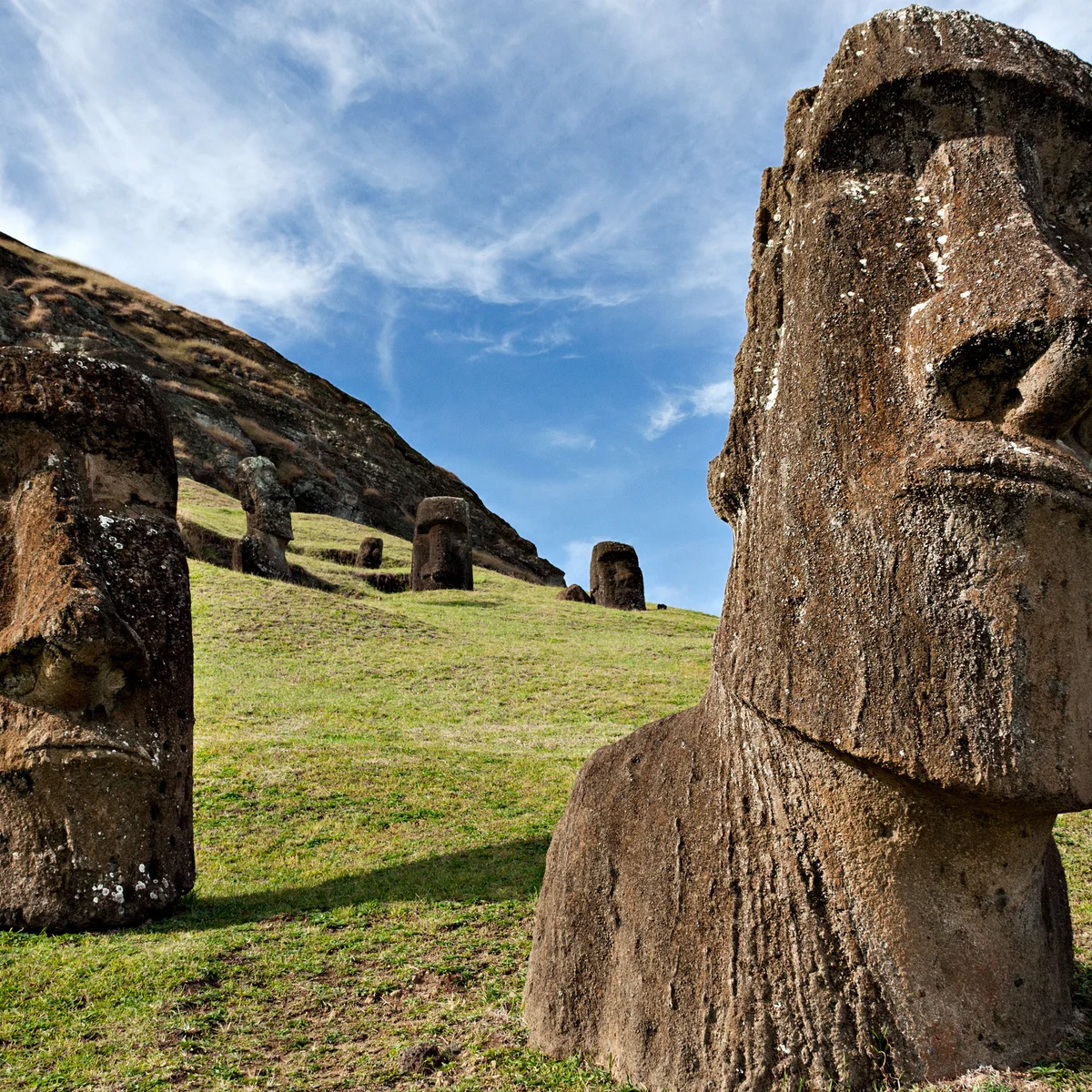
All the metaphors we use to describe heedlessly pursuing one’s own destruction – lemmings, cargo cults, Easter island, etc. – are actually colonial myths based on mistakes or lies.
The real analogy for heedlessly pursuing one’s own destruction is the colonial society itself.
It goes also to when we talk about ‘animal cunning’ of ‘savage animals’ – metaphors we use to excuse/explain away our (at least partly socially constructed) ‘natures’. A couple of decades ago New Internationalist changed a category in some ‘dictator trump cards’ thing it was doing. It was named ‘animal cunning’ but a reader wrote a very cogent letter to them and they said ‘yeah, you’re right.’
Ultimately, we believe and say things to protect ourselves, our sense of self, of the overarching Rightness of our Tribe and its actions. I’m not sure we could get through the day otherwise, but it also means that when circumstances change, our beliefs – policed, enforced, defended – don’t keep pace.
Sometimes the gap gets so wide that there is a ‘paradigm shift’ (in the Kuhnian sense). We are, of course, well past one for our species impact on the ‘natural world’ (the Fafocene).
Some people, with education, see this.
Most people with education do not (because, well, education can be your ticket to the Nice Things, and the hidden curriculum is one of obedience to our Lords and Masters).
Some people without education don’t see this, but plenty of people without education know it in their bones, in their tortured flesh.
Education and intelligence are only very VERY loosely tethered. Ditto for intelligence and wisdom. But we like our metrics (they give comfort, they are a short-cut etc) and so we assume people with PhDs are definitely smart. It really is not the case.
I have come a long way from Loukas’ Bluesky, but then, as per The Wire, everything’s connected.
Coda
Another very smart friend had this to say recently, at the end of a summary and critique of this book by Anton Jager.
“Because I think organisation is hierarchical in most of our corporates and governments. In a sense the hierarchy is disciplined by access to resources & accountability for those resources. But I also yearn for organisational forms that are more democratic at the core.”
Yes, and Yeah, me too! Partly on emotional grounds etc, but ALSO because hierarchy is disciplined in exactly the ways you describe and (so) means that new problems that the existing hierarch’s models can’t cope with are ignored for so long that they become insoluble under ANY model… And that, I fear, is what has happened.
This was possibly two distinct blog posts but the link is – in case you are still reading
Our cognitive models are blunt, self-serving and dangerously seductive
Our organisational modes are tied to our cognitive models, and have the same problems
There is a time to fix models and modes. Leave it too late and you can find it “too late” – you’re evacuating cities, watching your crops die, watching it all slide out of view, and there’s nothing left to do but dance and drink and screw.
re this Hudson excerpt: ‘Ultimately, we believe and say things to protect ourselves, our sense of self, of the overarching Rightness of our Tribe and its actions. I’m not sure we could get through the day otherwise, but it also means that when circumstances change, our beliefs – policed, enforced, defended – don’t keep pace.’
Below is related, and I believe explanatory, commentary by an evolutionary anthropologist, author of Our Tribal Future, David Samson on the origins of our tribal instinct.
EXCERPT (Jun 27, 2023): Q: What is the most important idea readers will learn from your book?https://www.powerofusnewsletter.com/p/interview-david-samson-on-our-tribalA: The most important and shocking revelation is the unprecedented power of our “Tribe Drive” (i.e., coalition cognition) to warp human perception.
There is an emerging line of thought in evolutionary psychology that evolution does not favor true “veridical” perceptions and that natural selection routinely drives them to extinction. Evolution isn’t about being true, it’s about crafting perceptions that enhance survival and reproduction.
Groups shaped our brains throughout evolution, and so we come to a stunning realization that our perceptions are shaped not by truth but our identity groups. For example, there is nothing more human than believing in collective narratives. These tribal narratives were the glue that kept our camps, bands, and tribal signals and symbols coordinated in collective action and resilient to a host of existential challenges.
Like an optical illusion, group beliefs have this fantastical, strange, perception-warping property and the more it deviates from reality the more powerful a signal it is of collective identity. This explains most religious beliefs and their propensity to be paradoxical in nature. Think of the holy trinity for example. It defies logic that, all at once, a being can be three beings and one. But it’s a fantastic signal of coalitionary alliance. The more radical belief the stronger the signal that ‘we are one.’



re this Hudson excerpt: ‘Ultimately, we believe and say things to protect ourselves, our sense of self, of the overarching Rightness of our Tribe and its actions. I’m not sure we could get through the day otherwise, but it also means that when circumstances change, our beliefs – policed, enforced, defended – don’t keep pace.’
Below is related, and I believe explanatory, commentary by an evolutionary anthropologist, author of Our Tribal Future, David Samson on the origins of our tribal instinct.
EXCERPT (Jun 27, 2023): Q: What is the most important idea readers will learn from your book?https://www.powerofusnewsletter.com/p/interview-david-samson-on-our-tribalA: The most important and shocking revelation is the unprecedented power of our “Tribe Drive” (i.e., coalition cognition) to warp human perception.
There is an emerging line of thought in evolutionary psychology that evolution does not favor true “veridical” perceptions and that natural selection routinely drives them to extinction. Evolution isn’t about being true, it’s about crafting perceptions that enhance survival and reproduction.
Groups shaped our brains throughout evolution, and so we come to a stunning realization that our perceptions are shaped not by truth but our identity groups. For example, there is nothing more human than believing in collective narratives. These tribal narratives were the glue that kept our camps, bands, and tribal signals and symbols coordinated in collective action and resilient to a host of existential challenges.
Like an optical illusion, group beliefs have this fantastical, strange, perception-warping property and the more it deviates from reality the more powerful a signal it is of collective identity. This explains most religious beliefs and their propensity to be paradoxical in nature. Think of the holy trinity for example. It defies logic that, all at once, a being can be three beings and one. But it’s a fantastic signal of coalitionary alliance. The more radical belief the stronger the signal that ‘we are one.’