
What this project is about.
This one is from Book 13.
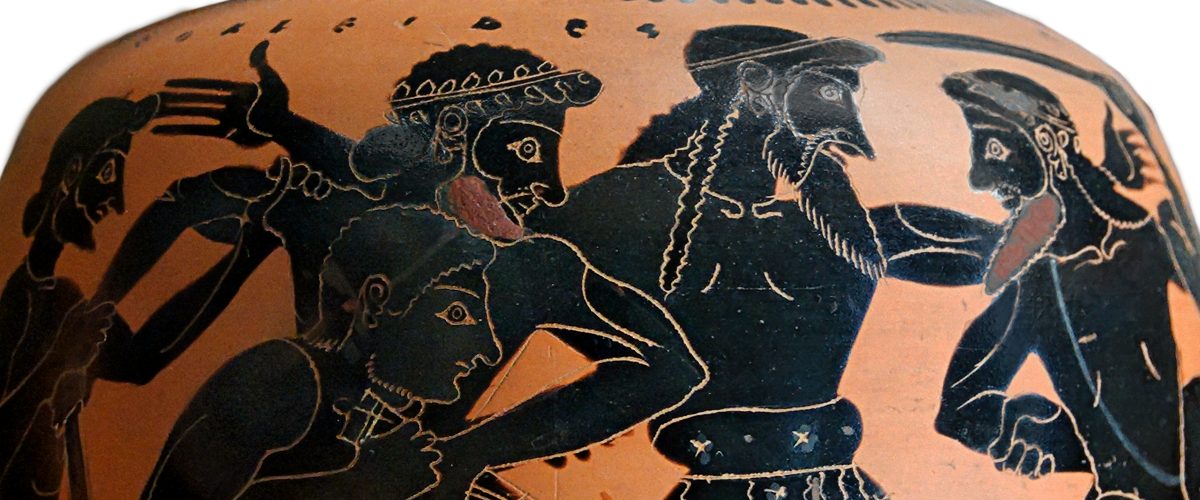
How long it took to read this (aloud):33 mins 16 seconds (the longest section of the whole thing, longer than Phaethon’s Ride and Nestor’s Tale of the Centaurs).
What it’s “about”: The Greeks argue over who should get Achilles’ armour. Ajax says he should because he is a blood-crazed beserker and Ulysses is a coward. Ulysses says Ajax is a meathead and he, Ulysses, is the necessary brains. Ulysses wins and Ajax stabs himself to death.
Words I didn’t know: None
Quotable quotes:
“It’s easier to talk, to tell a lie
Than fight. I am as shy at talking loud
As he is shy at fighting hand to hand,
In thick of battle I’m superior
But he can always find words that outrun me.
AND
As he left others, so he fell behind;
He made his own trap and fell into it.
AND
Dear Greeks, are you about to stand against me
Because my brains are always at your service?
AND
By tact, by flattery I moved his mind
Against his instincts as a family man.
Then I went to his wife, the poor girl’s mother,
Not to be won by reason, but by lies.
If Telamon’s brave son had talked to her,
Our ships would still be windless in that harbour.
AND
“It takes too long to tell the things I did,
All for your sakes — advice and scenes of action,
The crowded incidents of a long war.
AND
If you want facts from me about myself,
I planned disaster for the enemy:
Designed the trenches running round the city;
Cheered those who helped us — and they needed cheering
To break the boredom of an endless war;
I planned our commissary and went off
On secret operations, still kept guarded.
AND
Did I see Ajax take a stand against this,
Insist that Troy be ruined, and march to fight?
And did he stop the fools already turning
Toward ships for home? And did I see him stand,
Sword drawn, to bring deserters to his side?
— And this an easy job for one who loves
To speak only when he can praise himself,
Silent, except when on his feet for battle
Of course he joined the crowd and ran away.
AND
I stopped them as they ran; they swayed, then turned,
And soon enough they came to let me guide them.
Meanwhile our Agamemnon claimed our allies,
And yet the son of Telamon stood silent.
Thersites made a racket; that maimed creature
Walked up to scold the king until I gave him
The kind of bitter treatment he deserved —
Then I stepped forward, and with fair language
Cheered up the timid souls among my friends —
AND
That’s when I killed Dolon, the Trojan spy,
Out on a secret mission like our own —
Nor did I kill him at first sight; I kept him
Twisting until he told me every scheme
That crooked Troy contrived against our siege.
That duty done — for I was done with spying —
I could have ventured home to get rewards,
But no, I saw King Rhesus’ tents before me;
I killed him outright and his generals too.
Since I had won and I was thankful for it,
I drove my captured horses with an air,
Chariot and team, for I had earned that triumph.
Come take away Achilles’ armour from me,
Return the horses to the enemy
To pay for one night’s work and see if
Ajax, even at best, gave more than I.
AND
“Ajax, stop growling words beneath your breath,
Stop glancing up at me as if to say
Tydides helped me on that night in Troy;
The man has earned his praise and earned it well.
And when your shield defended our great navy
You did not stand alone, friends, men were with you —
And I stood with a single friend beside me.
AND
All these brave men, however strong and able,
Good as myself at fighting on the field,
Know my superior wit. A good sword arm
Is always of good use in any war,
But when it comes to strategy in fighting,
You need my leadership, my art, my brains.
Men may be brainless, yet have fighting power,
But my mind holds the warnings of the future.
AND
For many, many years I’ve held our worries,
Our hopes, our fears, our fortunes, in my mind
And all I ask is honourable reward.
The work is done: obstinate fates removed;
I opened up tall Troy and we walked in.
AND
Madness defeated undefeated Ajax
And ripping out his sword, he cried aloud,
“Yet this is mine, or does Ulysses claim it?
This time I’ll make it work against myself,
And if its steel grew stained with Trojan blood,
Today its iron will take a deeper colour,
The darker stain of him who carries it;
No one but Ajax can out-swordplay Ajax.”
With this he drove the sword into his breast,
His open breast that never showed a scar.
Nor was there any hand that had the power
To pluck it out; only the fountain force
Of Ajax’ blood behind it purged the steel.
In ancient times the blood-stained ground beneath it
Grew fertile with the blood of Hyacinthus,
Grass green and red gave birth to purple flowers,
Which were engraved for boy as well as Ajax,
“Ai, ai,” the name of hero, cry of grief.
How it lands to my eco-sensibility: xx
Obvious allusions, ways it was used (that I am aware of already) : xx
What I know I didn’t ‘get’: xx
To my knowledge, who’s used it why/how (RACC):
The Contention of Ajax and Ulysses for the Armour of Achilles is a short comedic Caroline era stage play, a ‘Dramatic Interlude’ in three scenes written by James Shirley performed 1654-58[1] and first published in 1659. As its title indicates, the subject of the play is a staple of the Greek classical literature: the fate of Achilles’ armour, after the hero was fatally wounded in the heel by Hector. Shirley most likely drew upon Book 13 of the Metamorphoses of Ovid as his direct source, along with Thomas Heywood‘s play The Iron Age.[2] The poem from the final scene, “The glories of our blood and state”, has been set to music several times.
Further research questions: xx
Anything else: xx
https://ovidsmetamorphoses.blogspot.com/2012/11/hand-and-mind-ajax-vs-ulysses.html
Argument and Allocation: The Contention of Ajax and Ulysses for the Armor of Achilles
John Alcorn Science & Society Vol. 58, No. 2 (Summer, 1994) , pp. 163-174 (12 pages)


Leave a Reply