
Book Review: Rowlands, I. (1995) The politics of global atmospheric change Manchester: Manchester University Press
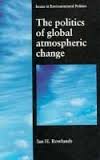 This is one for the geeks only. If you’re interested in the vicious fights in the 1980s an early 1990s about whether and how “we” would do something about ozone depletion and carbon dioxide build-up, then grab with both ands; It’s well-written, with a useful format that looks – at both ozone and climate change- at the Science, Interests, Equity and Catalysts (people and organisations that make stuff happen – or stop it happening). (1)
While it is far too specialised and “out of date” for the general reader, there are lots of useful snippets that help you understand the world. My favourite is the fact that while scientists got the theory of ozone depletion caused by CFCs, there was an “unnecessary” delay in collecting the evidence.
Indeed, what made it even more unexpected was that the US satellites that had been gathering data over the Antarctic since 1979 had not detected any significant change in ozone levels. The reason being, tit was discerned later, was that the satellites’s computers had been programmed to discard any data that were outside an anticipated range. When the computers were reprogrammed, with this condition removed, they revealed the same pattern of spring-time depletion that had been discovered by the British ground-based stations. As John Gribbin (2) notes:
“The point is that in the late 1970s and early 1980s atmospheric scientists were increasingly confident that they understood, more or less, what was going on in the atmosphere. Both the chemistry and the dynamics of air movements were being analysed in more detail than ever before, and a coherent picture was emerging. But nowhere in that coherent picture was there even a hint that a dramatic change like the development of a huge hole in the ozone layer could occur.”
Rowlands (1995) Page 55
So, we are so sure of our theories that we misidentify signal as noise on occasion. #hairlessape #epicfail.
Rowlands also quotes a New Scientist journo on the subject of (science) policy entrepreneurs
“It could be argued that, if Bob Watson had been hit by a bus in 1980, we would not now have a treaty to save the ozone layer…. Watson did not discover the hole in the ozone layer, calculate how CFCs reach the stratosphere, or write the models that predict the damage. What he did do, however, was to bring the scientists who did that work together to reach a consensus on what was happening. He then helped to translate what they said into a language that politicians could not obfuscate or ignore. The result was the ozone treaty.”
Debora MacKenzie, How to use science and influence people New Scientist, 122 29 April 1989, page 69
That’s not Watson’s only service to an indifferent species. He also took over the reins of the IPCC from Bert Bolin in 1997. George W Bush got rid of him as soon as he could.
Footnote
(1) There’s a super useful chronology of the politics of both ozone layer depletion and of climate change (the two issues overlap in profound ways)
(2) Gribbin, J. (1988) The Hole in the Sky: Man’s Threat to the Ozone Layer (London, Corgi Books, p. 95)
 marchudson.net
Leave a comment